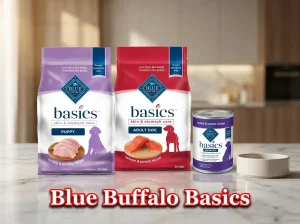
Is Blue Buffalo Basics a Good Dog Food? An Honest Review
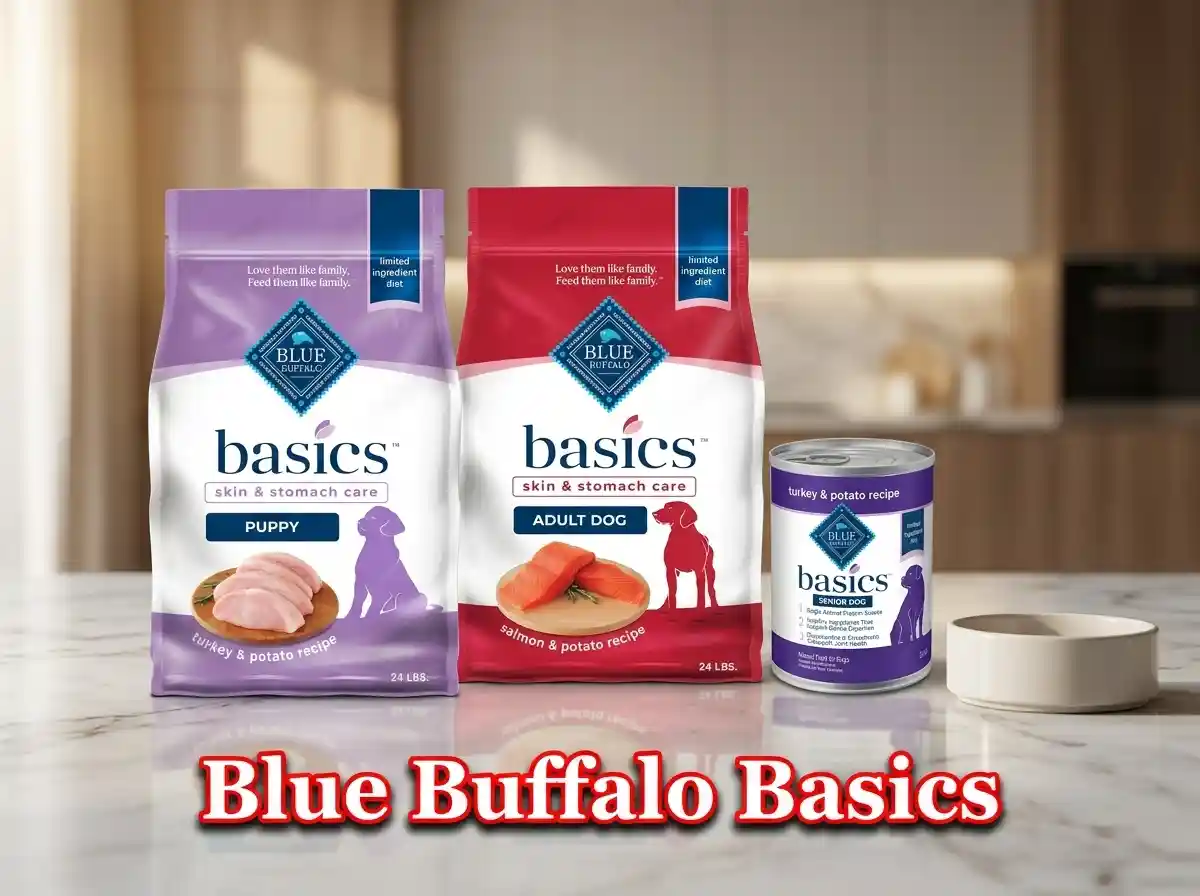
Is Blue Buffalo Basics a Good Dog Food? For many healthy adult dogs, especially those that need a simpler diet without chicken, beef, or common food ingredients. It offers named animal proteins, several limited-ingredient recipes, and both grain-inclusive and grain-free options. However, it is not perfect. Some recipes rely on peas and potatoes, and the standard kibble has a higher calorie count than its Healthy Weight version.
The best choice depends on your dog’s age, food history, body weight, and daily needs. Its turkey and potato recipe is a sensible starting point for adult dogs. The salmon recipe offers another protein choice, while the Healthy Weight formula has more fiber and fewer calories per cup. Looking at the actual label, feeding cost, and safety record makes the buying decision much easier.

Key Takeaways: Is Blue Buffalo Basics a Good Dog Food?
Blue Buffalo Basics offers useful choices, but the exact recipe matters more than the brand name.
- Turkey and Potato is a grain-inclusive adult recipe.
- Salmon and Potato offers another named animal protein.
- Healthy Weight has 329 kcal per cup and 10% maximum fiber.
- The adult recipes are intended for adult maintenance.
- The puppy recipe has a separate growth statement.
- FDA records include past Blue Buffalo recalls.
- Owner reviews show both good food acceptance and picky eating.
- Veterinary allergy tests need a stricter diet than most retail limited-ingredient foods.
Quick Verdict: Good choice for many dogs
| Specification / Feature | Official Target / Spec | Practical Meaning |
|---|---|---|
| Primary target | Adult dogs with food sensitivities | Offers several single-animal-protein recipes |
| Main protein | Turkey, salmon, lamb, or other named meats | Allows some protein-source choices |
| Key calorie value | 364 kcal per cup for standard turkey | Portion size needs attention |
| Nutritional status | AAFCO adult maintenance profile | Suitable for adult maintenance |
Overall verdict: 4/5 for suitable dogs.
Best for: Dogs that need a chicken-free recipe or a simpler ingredient list.
Who should skip it: Dogs that need a veterinary hydrolyzed diet or a special therapeutic formula.
Best starting recipe: Turkey and Potato Adult Dry Dog Food.
Main strength: Named animal protein and several recipe choices.
Main caution: Peas and potatoes need closer review in grain-free formulas.

Is Blue Buffalo Basics a Good Dog Food for Daily Feeding?
Yes, it can be a sound daily food for healthy adult dogs when the recipe meets their nutrient needs and suits their digestion. Its named meats, added vitamins, minerals, and AAFCO nutrient profile make it a reasonable option.
The brand also offers different recipes for dogs with different needs. This is useful when chicken or another protein does not suit a dog.
However, limited ingredients do not always mean higher nutritional quality. A food still needs good protein, fat, minerals, and calorie balance.
Who Should Choose It?
Blue Buffalo Basics may suit:
- Adult dogs that need a chicken-free food.
- Dogs that do well with turkey or salmon.
- Owners who prefer a limited-ingredient kibble.
Who Should Skip It?
Look at other options when your dog:
- Needs a prescription hydrolyzed protein diet.
- Has a medical need for strict mineral control.
- Needs a special diet for kidney, heart, or digestive disease.
The Vital Essentials dog food review may also help owners who are comparing standard kibble with freeze-dried raw food. These formats have very different feeding and handling needs.
Pros and Cons of Blue Buffalo Basics
The main benefits are its protein choices and clear adult maintenance recipes. Its main limits are ingredient complexity and the need to check each formula.
| Type | Feature | Observed Real-World Outcome |
|---|---|---|
| Pro | Named animal protein | Turkey or salmon is the first named meat |
| Pro | Multiple recipes | Owners can choose from several protein sources |
| Pro | Added omega fatty acids | Recipes include fish oil or other omega sources |
| Con | Pea ingredients | Some recipes use pea protein and pea fiber |
| Con | Calorie density | Standard turkey has 364 kcal per cup |
| Con | Retail LID formula | It cannot replace a clinical food allergy trial |
Blue Buffalo Basics Technical & Performance Analysis: What Do the Facts Reveal?
The label shows a moderate protein level, a range of fat levels, and different calorie values across recipes. These figures help explain which formula may suit a dog’s daily needs.
Official Label Breakdown: Guaranteed Analysis and Calories
The standard Turkey and Potato adult recipe has this published analysis.
| Nutrient | Standard Turkey | Healthy Weight |
|---|---|---|
| Crude protein | 20% min | 20% min |
| Crude fat | 12% min | 9% min |
| Crude fiber | 6% max | 10% max |
| Moisture | 10% max | 10% max |
| Calcium | 0.9% min | 0.9% min |
| Phosphorus | 0.7% min | 0.7% min |
| Calories per kg | 3,495 kcal | 3,278 kcal |
| Calories per cup | 364 kcal | 329 kcal |
The lower fat and higher fiber levels make Healthy Weight a different feeding choice. It is not simply the same kibble with smaller portions.
Dry Matter Basis: What Do the Numbers Mean?
Dry matter basis removes water from the calculation.
Formula:
DMB (%) = As-fed nutrient (%) ÷ (100 − moisture %) × 100
For standard turkey:
- Protein = 20 ÷ 90 × 100 = 22.22%
- Fat = 12 ÷ 90 × 100 = 13.33%
- Fiber = 6 ÷ 90 × 100 = 6.67%
For Healthy Weight:
- Protein = 20 ÷ 90 × 100 = 22.22%
- Fat = 9 ÷ 90 × 100 = 10%
- Fiber = 10 ÷ 90 × 100 = 11.11%
These are estimates based on maximum moisture and guaranteed limits. Actual food values can differ.
Ash is not published in the listed analysis. Therefore, exact NFE, carbohydrate, and modified Atwater calorie percentages cannot be calculated without an ash value.
Ingredient Quality: What Is Really Inside?
The standard recipe uses turkey as its first animal protein. It also includes grains such as oatmeal and brown rice.
Other key ingredients include:
- Turkey meal: A concentrated animal protein source.
- Brown rice: Supplies starch and some fiber.
- Oatmeal: Adds carbohydrates and fiber.
- Potatoes: Provide starch and energy.
- Peas: Supply starch, fiber, and plant protein.
- Fish oil: Supplies omega-3 fatty acids.
- Flaxseed: Adds plant-based omega-3 fats.
Fresh meat contains much more water than meat meal. During cooking, much of that water leaves the food. This is why meat meal can provide a more concentrated protein source.
Also, crude protein does not tell the full story. Pea protein can add to the total. A high protein number does not prove that all protein comes from animal meat.
Is Blue Buffalo Basics Suitable for Puppies and Senior Dogs?
The adult recipe is for adult maintenance, not puppy growth. Blue Buffalo has separate puppy and senior options, so check the exact life-stage statement before buying.
Puppy Growth and Large-Breed Needs
The Basics Puppy Turkey and Potato recipe has:
| Nutrient | Published Value |
|---|---|
| Protein | 26% min |
| Fat | 15% min |
| Fiber | 5% max |
| Moisture | 10% max |
| DHA | 0.15% min |
| Calcium | 1.2% min |
| Phosphorus | 1.0% min |
| Energy | 397 kcal/cup |
The puppy recipe is formulated to meet AAFCO growth nutrient profiles.
For a puppy expected to weigh 70 pounds or more as an adult, check that exact package for an AAFCO statement that includes growth of large-size dogs. Do not assume every puppy formula meets this extra requirement.
Senior Dogs and Weight Control
Older dogs may need fewer calories but still need good protein to help keep muscle.
The Basics Senior range offers another option. Healthy Weight is also worth considering for adult dogs that need calorie control.
Use body condition score (BCS) as a guide. You should be able to feel the ribs without pressing hard. Your dog should also have a clear waist when viewed from above.
Limited Ingredients vs. True Food Allergies
A retail limited-ingredient diet can reduce the number of ingredients in a dog’s bowl. But it cannot confirm a food allergy.
Common signs include:
- Itchy skin.
- Repeated ear infections.
- Vomiting or loose stools.
- Hair loss or skin redness.
A vet may advise a strict elimination trial with a hydrolyzed or novel-protein diet. The Merck Veterinary Manual notes that skin-related trials often need 8–12 weeks. The vet may then guide a controlled food challenge to identify the trigger.
Grain-Free vs. Grain-Inclusive: What Should You Choose?
Grain-free is not always better. A grain-inclusive recipe can be a good choice unless your dog has a proven need to avoid a certain grain.
The standard Turkey and Potato recipe uses grains. Brown rice and oatmeal can supply energy and fiber.
The grain-free Basics recipes use other starch sources. Some also place peas, pea starch, and pea protein high in the ingredient list.
FDA DCM Investigation: What Owners Should Know
The FDA has studied a possible link between some diets and canine dilated cardiomyopathy (DCM), a heart muscle disease.
Blue Buffalo appeared in the FDA’s 2019 case report list, with 31 reports through April 30, 2019. This does not prove that Blue Buffalo caused DCM. The FDA says reported cases alone cannot establish a cause.
The current science remains uncertain. Talk to your vet before choosing a grain-free diet for long-term use.
Blue Buffalo Basics Recipe Comparison: Which One Is Best?
The turkey recipe is a useful starting point, while salmon offers another protein source and Healthy Weight suits dogs that need more fiber and fewer calories.
| Recipe | Protein | Fat | Fiber | Calories/Cup | Life Stage |
|---|---|---|---|---|---|
| Turkey & Potato | 20% | 12% | 6% | 364 | Adult |
| Salmon & Potato | 20% | 12% | 6% | 359 | Adult |
| Healthy Weight Turkey | 20% | 9% | 10% | 329 | Adult maintenance |
The Salmon recipe also has a minimum 1% omega-3 fatty acid level. The Healthy Weight recipe includes L-carnitine, glucosamine, and chondroitin.
For a dog that does not need weight control, the standard turkey recipe is a reasonable first choice.
Blue Buffalo Basics vs. Premium Competitors
Blue Buffalo Basics has a lower purchase price than the three comparison foods below. Its cost per calorie is also lower than Wellness Simple and ACANA in this price snapshot.
The following US retail prices are a comparison snapshot, not fixed market prices.
| Metric | Blue Basics Turkey | Purina Pro Plan Turkey | Wellness Simple Turkey | ACANA Lamb |
|---|---|---|---|---|
| Bag size | 24 lb | 24 lb | 26 lb | 22.5 lb |
| Bag price | $69.58 | $77.48 | $88.99 | $105.99 |
| Protein DMB | 22.2% | 29.5% | 28.9% | 35.2% |
| Fat DMB | 13.3% | 18.2% | 12.2% | 19.3% |
| Calories/cup | 364 | 435 | 438 | 371 |
| AAFCO statement | Adult maintenance | Adult maintenance | Adult maintenance | All life stages |
| Cost/1,000 kcal | $1.83 | $1.85 | $2.15 | $3.08 |
| Daily cost at 1,000 kcal | $1.83 | $1.85 | $2.15 | $3.08 |
| 30-day cost | $54.86 | $55.59 | $64.62 | $92.45 |
For a fair cost comparison, the daily target is 1,000 kcal for each food. It is a math baseline, not a feeding order for every dog.
For other buying options, see the Kirkland Nature’s Domain dog food review and Pure Balance dog food review. The Acana dog food review may also help when you compare premium limited-ingredient recipes.
Recall History: Is Blue Buffalo Basics Safe?
Blue Buffalo has a past recall record, but the verified events below do not show an active recall of the standard Basics Turkey recipe. The brand reported no active recalls as of October 7, 2026.
| Year | Product Scope | Reason | Food Type | Official Status |
|---|---|---|---|---|
| 2010 | Basics Salmon and other Blue Buffalo dog lines | High vitamin D levels | Dry kibble | Voluntary recall reported by ASPCA |
| 2017 | Wilderness Rocky Mountain Red Meat Dinner | High beef thyroid hormone levels | Wet dog food | FDA recall terminated |
The 2010 recall included specific batches of Basics Salmon dry food. It did not cover every Basics recipe.
The 2017 FDA notice involved one production lot of Wilderness wet food, not Basics kibble. The FDA marked that recall as terminated.
For the latest alerts, check the official FDA pet food recall and withdrawal page. Also check the Blue Buffalo recall page.
Brand Ownership and Manufacturing Quality
Blue Buffalo is owned by General Mills, which completed its acquisition in April 2018. The company says it uses ingredient checks, batch checks, in-process testing, and final product reviews.
Blue Buffalo says veterinarians and animal nutrition experts help select ingredients and develop its recipes. It also reports that some products are made in Thailand by trusted partners, while it has US manufacturing facilities.
WSAVA recommends asking pet food makers about the people who formulate diets, their qualifications, feeding trials, research, and quality controls. These are useful questions when choosing any long-term diet.
One important point: AAFCO does not approve, test, or certify dog food. The label should state that the product is formulated to meet the AAFCO nutrient profiles for its stated life stage.
Real Pet Owner Reviews: What Do Customers Report?
Customer feedback is mixed, although many owners report good food acceptance and improved stool quality. These are individual experiences, not proof that the food will work for every dog.
One verified buyer on Chewy wrote:
“My two terriers have very sensitive stomachs, and this is the one food that consistently works for both of them.”
Another buyer gave the food three stars and wrote:
“He really didnt care for it.”
Chewy displayed a 4.6 out of 5 rating from 545 ratings for the standard Turkey and Potato product in the review listing.
The lesson is simple: a good ingredient list does not guarantee that every dog will enjoy the taste or tolerate the recipe.
How to Transition and Feed Blue Buffalo Basics
A slow food change helps your dog adjust to a new recipe and makes it easier to spot a poor response. Blue Buffalo provides a 14-day change schedule.
| Days | New Food | Old Food |
|---|---|---|
| 1–4 | 25% | 75% |
| 5–8 | 50% | 50% |
| 9–11 | 75% | 25% |
| 12–14 | 100% | 0% |
Watch appetite, stool, skin, and body weight during the change.
Real Feeding Costs and Hidden Expenses
A 24-lb bag of standard Turkey and Potato costs about $69.58 in the US retail price snapshot. At 3,495 kcal/kg, the bag holds about 38,047 kcal.
Cost formula:
Cost per 1,000 kcal = Bag price ÷ Total bag calories × 1,000
$69.58 ÷ 38,047 × 1,000 = $1.83
At a daily target of 1,000 kcal:
- Daily food cost: $1.83.
- 30-day food cost: $54.86.
- Daily serving: about 2.75 cups.
- Estimated bag life: about 38 days.
A standard 24-lb bag costs less per pound than a small bag. But buying a large bag before checking food acceptance can lead to waste.
Also count delivery fees, local taxes, storage bins, and spoiled food. Keep the food in its original bag, seal it well, and store it in a cool, dry place.
Label Claim Verification: Marketing vs. Label Facts
Some Blue Buffalo claims have clear support in the ingredient list, while others need a closer look at the full recipe.
| Package Claim | Label Reality | Verdict |
|---|---|---|
| Real meat first | Named turkey or salmon starts the recipe | Verified |
| Limited ingredient | Uses fewer chosen protein sources, but still has many ingredients | Partially supported |
| Skin and coat support | Includes omega-3 and omega-6 sources | Supported |
| No chicken | The listed Basics recipes exclude chicken | Verified |
| Grain-free | Applies only to selected recipes | Needs context |
Practical Buying Checklist
Check five facts before you buy: the life-stage claim, calories, guaranteed analysis, full ingredient list, and feeding cost.
| Your Dog’s Need | Suggested Option | Main Reason |
|---|---|---|
| Adult dog without chicken | Turkey and Potato | Named turkey protein |
| Fish-based diet choice | Salmon and Potato | Salmon is the main animal protein |
| Weight control | Healthy Weight Turkey | Lower calorie density |
| Puppy growth | Puppy Turkey and Potato | Separate growth formula |
| Confirmed food allergy | Vet-selected diet | A retail LID cannot prove an allergy |
For the first 30 days, keep a simple record of food intake, stool quality, body weight, appetite, and skin changes. This gives your vet useful facts if the diet does not suit your dog.
Frequently Asked Questions
1. Is Blue Buffalo Basics a high-quality dog food?
Yes, it offers named animal proteins, added nutrients, and complete adult maintenance recipes. The exact formula still matters, so check its protein sources and calories.
2. Is Blue Buffalo Basics good for sensitive stomachs?
It may suit some dogs with food sensitivities. However, dogs with ongoing vomiting or diarrhea need a vet check before a food change.
3. Does Blue Buffalo Basics contain chicken?
The Basics line is designed without chicken. Check the current package for the exact recipe and ingredient list.
4. Is Blue Buffalo Basics grain-free?
Some recipes are grain-free, but the standard Turkey and Potato recipe uses grains such as brown rice and oatmeal.
5. Is Blue Buffalo Basics good for puppies?
The separate Puppy Turkey and Potato formula is made for growth. Do not feed the adult maintenance recipe as a puppy’s main food.
6. Is Blue Buffalo Basics good for senior dogs?
It may suit healthy senior dogs. Choose portions based on muscle mass, body condition, activity, and veterinary advice.
7. Has Blue Buffalo Basics been recalled?
Yes. Specific Basics Salmon batches were part of a 2010 voluntary recall due to excess vitamin D. This was not a recall of every Basics product.
8. How many calories are in Blue Buffalo Basics Turkey?
The standard adult Turkey and Potato recipe lists 364 kcal per cup and 3,495 kcal per kg.
9. Does Blue Buffalo Basics help with food allergies?
It can help owners avoid selected ingredients. But a true food allergy needs a veterinary elimination diet and a controlled food challenge.
Consultation
Blue Buffalo Basics is worth considering for healthy adult dogs that need a chicken-free food or a simpler range of protein choices. The Turkey and Potato recipe gives 364 kcal per cup, while Healthy Weight has 329 kcal per cup and more fiber. These differences can affect daily portions and monthly costs. The brand also has a documented recall history, so check the FDA notices and package lot details before each purchase.
Choose Blue Buffalo Basics when its protein source, nutrient profile, and life-stage claim match your dog’s needs. Skip it when your dog needs a prescription diet, a strict clinical allergy trial, or a special medical formula. Compare it with Acana, Pure Balance, and other options before you settle on a long-term food. The best diet is one your dog can eat well, digest well, and stay at a healthy weight on.

Taslima Akter Sumaiya is a passionate pet mom and the founder of PetFoodHubing.com, dedicated to helping dog and cat parents make informed nutrition and food choices. With a Doctor of Veterinary Medicine (DVM) background and education from the University of California, Davis – School of Veterinary Medicine, along with professional experience connected to the United States Department of Agriculture (USDA), she brings a science-informed perspective to pet food research and reviews. Her work is further informed by authoritative veterinary and animal-health research, including insights from USDA-ARS experts such as Dr. Jitender P. Dubey. Through PetFoodHubing, she aims to make pet nutrition simpler, clearer, and more trustworthy for everyday pet parents. Visit now to get more information on How we test and Sources or about us…