Is Taste of the Wild Good Dog Food? My Honest Take

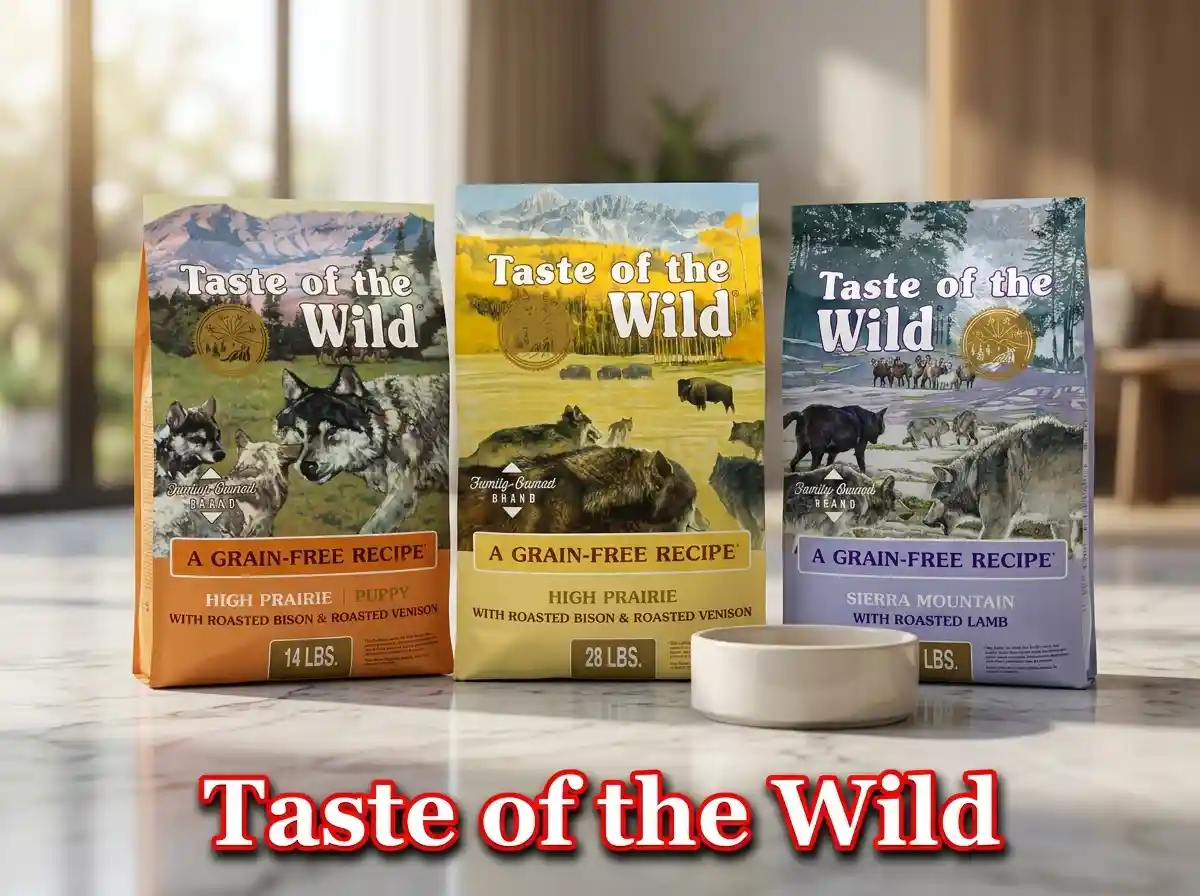
Is Taste of the Wild Good Dog Food? For many healthy adult dogs. It offers named animal proteins, useful fatty acids, added probiotics, and both grain-free and ancient-grain recipes. However, high protein does not always mean better nutrition. Some recipes also rely on peas, lentils, and potatoes.
The best choice depends on your dog’s age, health, activity, and food needs. High Prairie and Pacific Stream are adult-maintenance recipes. Ancient Prairie offers a different option because its AAFCO statement also covers large-breed puppy growth.

Key Takeaways: Is Taste of the Wild Good Dog Food?
- Overall verdict: A good option for some healthy dogs, but not the best fit for every dog.
- Best for: Adult dogs that do well on its protein and ingredient mix.
- Main strength: A wide choice of meat and fish recipes.
- Main concern: Some grain-free recipes use many legume-based ingredients.
- Best grain-inclusive choice: Ancient Prairie.
- Recall history: A voluntary recall took place in 2012.
- Value: A 28-pound bag costs about $58.99 in the US online market.
Quick Verdict
| Item | Verdict |
|---|---|
| Overall rating | 4.2/5 |
| Best adult recipe | High Prairie |
| Best grain-inclusive recipe | Ancient Prairie |
| Best fish recipe | Pacific Stream |
| Main benefit | High protein and recipe variety |
| Main concern | Grain-free diet and DCM questions |

Is Taste of the Wild a Good Dog Food?
Yes, Taste of the Wild offers complete and balanced dog food recipes, but the recipe matters more than the brand name. Its animal proteins, added nutrients, and calorie levels make it worth considering. Still, some dogs need a more specific diet.
The brand is owned by Diamond Pet Foods. It uses seven US manufacturing facilities and says it has quality-control staff and food safety checks.
Who should choose it?
- Healthy adult dogs that enjoy its recipes.
- Dogs that do well with fish or meat-based food.
- Owners who want both grain-free and grain-inclusive choices.
Who should skip it?
- Dogs on a vet-prescribed diet.
- Dogs with a known allergy to a listed ingredient.
- Dogs whose vets advise against grain-free food.
Pros and Cons of Taste of the Wild
Here is what stands out when you look at its labels, calories, and owner feedback.
| Type | Feature | Observed Real-World Outcome |
|---|---|---|
| Pro | Named animal proteins | Recipes offer fish, lamb, bison, and other meat sources. |
| Pro | Added probiotics | Dry dog recipes contain K9 Strain probiotics. |
| Pro | Recipe choices | Owners can choose grain-free or ancient-grain food. |
| Con | High calorie levels | Some dogs may need smaller portions. |
| Con | Plant proteins | Peas and pea flour add to total protein. |
| Con | Grain-free recipes | They need extra care when choosing a long-term diet. |
Taste of the Wild Nutrition: Three Recipe Tests
The label shows clear differences between its main recipes. High protein is not the only thing to check. Fat, fiber, calories, and life-stage claims matter too.
Guaranteed Analysis and Dry Matter Basis
These are the current figures shown on the official US recipe pages.
| Nutrient | High Prairie | Pacific Stream | Ancient Prairie |
|---|---|---|---|
| Protein | 32% | 25% | 32% |
| Fat | 18% | 15% | 18% |
| Fiber | 4% | 5% | 3% |
| Moisture | 10% | 10% | 10% |
| DMB protein | 35.6% | 27.8% | 35.6% |
| DMB fat | 20% | 16.7% | 20% |
| Calories/kg | 3,719 | 3,600 | 3,920 |
| Calories/cup | 422 | 408 | 445 |
DMB formula:
DMB = Nutrient % ÷ (100 − Moisture %) × 100.
For High Prairie:
32 ÷ 90 × 100 = 35.6% protein.
These DMB figures use the stated maximum moisture. They are estimates, not lab results.
Ash, calcium, and phosphorus are not published in the current US guaranteed analysis shown here. So, a full carb estimate and calorie split using modified Atwater factors cannot be worked out without extra nutrient data.
What Is Inside the First Ingredients?
High Prairie: Water buffalo, lamb meal, chicken meal, sweet potatoes, peas, pea flour, and chicken fat.
This is an interesting mix. Lamb and chicken meals provide concentrated animal protein. Peas and pea flour also add plant protein. Roasted bison and venison appear later in the ingredient list, not at the top.
Pacific Stream: Salmon, fish meal, sweet potatoes, potatoes, peas, pea flour, and lentils.
This recipe gets its animal protein from fish. It also has no egg products. But it still contains plant protein sources. It may suit some dogs that cannot eat eggs, but it is not a proven allergy treatment.
Ancient Prairie: Water buffalo, pork, chicken meal, grain sorghum, millet, chicken fat, and cracked pearled barley.
This recipe includes ancient grains. It offers a useful choice for owners who want to avoid a grain-free diet.
Grain-Free vs. Ancient Grains: What Should You Choose?
Ancient Prairie is a sensible starting point for owners who prefer grain-inclusive food. High Prairie and Pacific Stream are grain-free, with peas and other legumes among their early ingredients.
The FDA looked into reports of dilated cardiomyopathy (DCM), a heart disease in dogs. Taste of the Wild appeared in 53 reports submitted through April 30, 2019.
That number does not prove the food caused the disease. The FDA says the issue is complex and may involve many factors. It also says report counts alone cannot establish a cause.
For this reason, do not pick grain-free food just because it sounds more natural. Ask your vet which food fits your dog’s needs.
Puppy, Adult, and Senior Dog Suitability
Not every Taste of the Wild recipe suits every life stage. Check the exact AAFCO statement before buying.
| Recipe | Life-stage statement | Best fit |
|---|---|---|
| High Prairie | Adult maintenance | Healthy adult dogs |
| Pacific Stream | Adult maintenance | Healthy adult dogs |
| Ancient Prairie | All life stages, including large-breed growth | Puppies and adult dogs |
Ancient Prairie includes a statement for the growth of large dogs with an adult weight of 70 pounds or more. That is an important point for large-breed puppy owners.
For senior dogs, check calorie needs and body condition. The word senior on a food bag is not enough to prove that a food suits an older dog.
AAFCO does not approve, test, or certify pet food. It sets nutrient profiles used in pet food rules. The label tells you which life stages the food is made to support.
Food Allergies: Is Pacific Stream the Answer?
Pacific Stream may suit some dogs with food sensitivities, but it cannot diagnose a food allergy. A dog can react to many different food proteins.
Signs may include itching, ear trouble, vomiting, or loose stools. These signs can also have other causes.
The Merck Veterinary Manual explains that a strict food trial is the best way to check a food allergy. Vets may use a hydrolyzed or novel-protein diet. Other foods and treats must not interfere with the trial.
For another brand comparison, see our Open Farm dog food review.
Recall History: Is Taste of the Wild Safe?
Taste of the Wild has a known 2012 recall history, but that event should be read in context.
| Year | Product scope | Reason | Outcome |
|---|---|---|---|
| 2012 | Certain batches of dry pet food | Potential Salmonella contamination | Voluntary recall |
The recall involved food made at Diamond Pet Foods’ Gaston, South Carolina, plant. The CDC linked some dry dog foods from that plant to a multistate Salmonella outbreak.
Taste of the Wild says that later testing found no Taste of the Wild product contaminated. The company also says it monitors food safety during production.
For current updates, check the FDA’s official pet food recall and safety page.
Real Owner Reviews: What Do Customers Say?
Owner feedback shows that dogs can react to the same food in very different ways.
The brand’s review page showed 4.7 stars across 6,148 reviews when checked. One owner wrote, “He loves Ancient Stream Salmon!”
However, a recent Chewy buyer reported that “my pups don’t want to eat it” after noticing an unusual smell in a batch. Another owner said the food caused gas in a dog that liked the taste.
These are personal reports, not proof of a defect or health effect. They do show why appetite, stool quality, and food freshness matter.
Taste of the Wild Feeding Cost: Is It Worth the Price?
A low bag price does not always mean a low feeding cost. Calories per kilogram give a fair way to compare food value.
A 28-pound bag of these Taste of the Wild recipes was listed at about $58.99. The following math uses a daily target of 1,000 kcal for comparison. It is not a feeding rule for every dog.
| Cost item | High Prairie | Pacific Stream | Ancient Prairie |
|---|---|---|---|
| Bag size | 28 lb | 28 lb | 28 lb |
| Bag price | $58.99 | $58.99 | $58.99 |
| Daily amount | 269 g | 278 g | 255 g |
| Daily cost | $1.25 | $1.29 | $1.18 |
| 30-day cost | $37.47 | $38.71 | $35.55 |
| Cost per 1,000 kcal | $1.25 | $1.29 | $1.18 |
Taste of the Wild vs. Three Other Brands
Here is another useful price check. All prices are regular US online purchase prices from the listings checked.
| Comparison | Taste of the Wild | IAMS | Purina Pro Plan | Wellness |
|---|---|---|---|---|
| Recipe | High Prairie | MiniChunks | Salmon & Rice | Chicken & Oatmeal |
| DMB protein | 35.6% | 27.8% | 29.5% | 26.7% |
| DMB fat | 20% | 16.1% | 18.2% | 12.2% |
| Calories/cup | 422 | 393 | 449 | 427 |
| Bag size | 28 lb | 30 lb | 30 lb | 30 lb |
| Bag price | $58.99 | $46.97 | $77.48 | $69.98 |
| Cost per 1,000 kcal | $1.25 | $0.94 | $1.46 | $1.43 |
| 30-day cost | $37.47 | $28.08 | $43.76 | $43.05 |
The math shows that IAMS costs less per 1,000 kcal in this sample. Taste of the Wild sits between the lower-cost and higher-cost choices.
For another premium option, read our Victor Super Premium dog food review.
For other food styles, see our Grandma Lucy’s dog food review and Evanger’s dog food review.
Cost formula: Bag price ÷ (bag weight in kg × kcal per kg) × 1,000.
These figures do not include delivery fees, tax, treats, or food waste. Keep dry food in a sealed container in a cool, dry place. Buy a bag size your dog can finish while the food is still fresh.
How to Choose the Right Recipe
Check five things before you buy.
- Read the AAFCO life-stage statement.
- Check calories per cup.
- Compare protein, fat, fiber, and moisture.
- Read the full ingredient list.
- Work out the daily cost per 1,000 kcal.
How to Change Your Dog’s Food
Use a slow change over 7–10 days. Start with a small amount of the new food mixed with the old food. Raise the new food amount bit by bit. Watch appetite and stool quality during the change.
Frequently Asked Questions
1. Is Taste of the Wild a high-protein dog food?
Yes. High Prairie and Ancient Prairie list 32% minimum crude protein. Pacific Stream lists 25%. These are as-fed figures, so compare them on a dry matter basis when looking at other brands.
2. Is Taste of the Wild grain-free?
Many recipes are grain-free. The Ancient Grains range uses grains such as sorghum, millet, and quinoa.
3. Is Taste of the Wild good for puppies?
Some recipes are made for adult maintenance only. Ancient Prairie has an All Life Stages statement that includes large-breed puppy growth.
4. Does Taste of the Wild have probiotics?
Yes. The brand adds K9 Strain probiotics to its dry dog food recipes.
5. Has Taste of the Wild ever been recalled?
Yes. A voluntary recall took place in 2012 due to possible contamination concerns. The brand says later tests found no Taste of the Wild product contaminated.
6. Is Pacific Stream good for dogs with allergies?
It has fish as its animal protein source and contains no egg products. But it is not a vet-approved allergy test diet.
7. Does Taste of the Wild contain chicken?
Some recipes do. High Prairie and Ancient Prairie both list chicken meal or chicken fat. Read the full label if your dog must avoid chicken.
8. Is Taste of the Wild worth the price?
It can be a good value for dogs that suit its recipes. Compare cost per 1,000 kcal, not just the price of the bag.
Consultation
Taste of the Wild has good points. It offers named animal proteins, added probiotics, and a wide range of recipes. Ancient Prairie also gives owners a grain-inclusive option. High Prairie is a useful adult recipe for dogs that suits its ingredient mix.
Still, it is not the right choice for every dog. Grain-free recipes need careful thought. Some dogs may also dislike the taste or have trouble with a certain ingredient. Check the life-stage claim, calorie level, and full label before you buy.
My final advice: Choose Taste of the Wild when its recipe fits your dog’s needs and your budget. Skip it when your dog needs a special vet diet or has a known issue with its ingredients. The best food is one that meets your dog’s needs, supports good health, and fits your long-term budget.

Taslima Akter Sumaiya is a passionate pet mom and the founder of PetFoodHubing.com, dedicated to helping dog and cat parents make informed nutrition and food choices. With a Doctor of Veterinary Medicine (DVM) background and education from the University of California, Davis – School of Veterinary Medicine, along with professional experience connected to the United States Department of Agriculture (USDA), she brings a science-informed perspective to pet food research and reviews. Her work is further informed by authoritative veterinary and animal-health research, including insights from USDA-ARS experts such as Dr. Jitender P. Dubey. Through PetFoodHubing, she aims to make pet nutrition simpler, clearer, and more trustworthy for everyday pet parents. Visit now to get more information on How we test and Sources or about us…