Feeding Schedule for Kittens by Age: My Real Life Experience
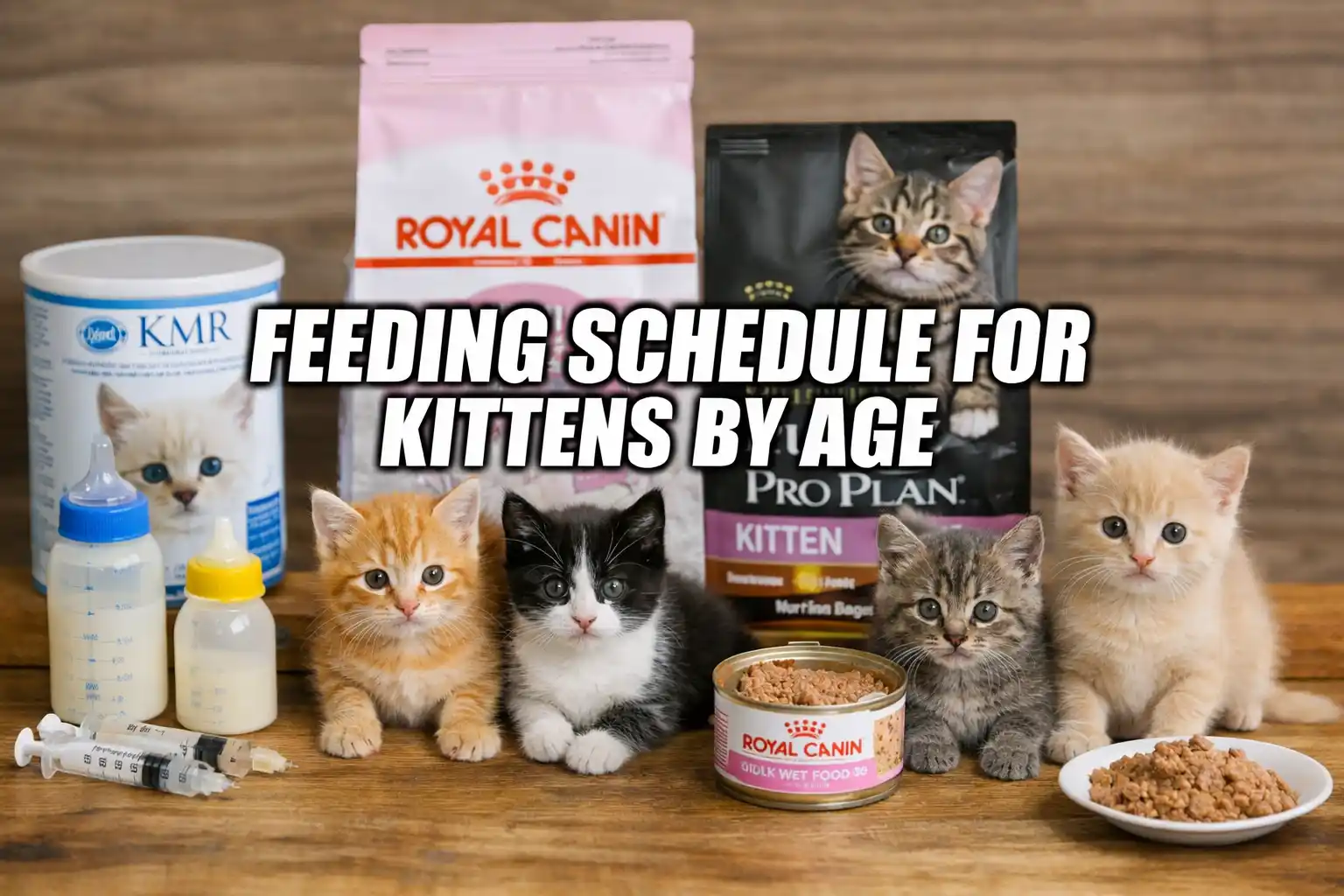
Bringing home a kitten feels sweet, but feeding can feel hard and fast. A clear feeding schedule for kittens by age tells you how often to feed and how much, from birth to 12 months. I have raised rescue kittens and learned that small, timed meals make growth smooth and safe. From birth to 4 weeks, they nurse every 2–3 hours. At 4–8 weeks, introduce wet food 4–6 times daily. From 2–6 months, feed 3–4 meals daily. After 6 months, transition to 2–3 meals per day.
Kittens need frequent, age-specific feeding to support rapid growth. As a pet nutrition writer who studies labels and growth charts, I suggest you match age and weight today and start a simple routine.

Feeding Schedule for Kittens by Age
Raising a kitten is like caring for a tiny, hungry athlete. They grow fast. They burn energy fast. And they need the right food at the right time.
I have raised rescue kittens and bottle babies. I learned that a good Feeding Schedule for Kittens by age is not just helpful. It is life-saving.
Let’s break it down in a simple way.
Why Feeding Frequency Matters for Kittens
Kittens need frequent meals because they grow fast, have tiny stomachs, and require steady energy for healthy development.
Kittens are not small adult cats. Their bodies work very differently.
- Rapid growth and high-calorie demands
They double or triple in weight in weeks.- Small stomach capacity
They cannot eat large meals at once.- Blood sugar stability
Long gaps between meals can cause weakness.- Immune and organ development
Early nutrition builds lifelong health.- Differences from adult cat feeding patterns
Adult cats eat 1–2 meals. Kittens need many more.
Quick Overview
| Reason | Why It Matters |
|---|---|
| Fast growth | Needs more calories per pound |
| Small stomach | Small, frequent meals work best |
| Blood sugar | Prevents weakness |
| Immune system | Strong early nutrition |
| Not adults | Different feeding rhythm |
Product Ratings (Brand-Level Insight)
Royal Canin – 9/10
Science-based. Excellent growth formulas. Higher price.
Purina Pro Plan – 8.5/10
Strong protein balance. More affordable. Widely available.

Feeding Schedule for Kittens by Age
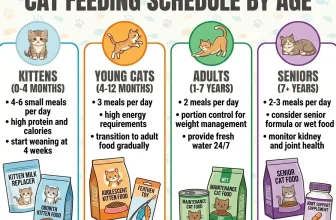
From newborn to 12 months, feeding frequency drops slowly as kittens grow and stomach size increases.
Newborn to 2 Weeks (0–1 Week & 2 Weeks)
- Nursing every 2–3 hours
- Overnight feeding required
- Formula feeding if orphaned (use Kitten Milk Replacer)
- Signs of adequate intake: round belly, calm sleep
- Weight gain: 10–15 grams per day
Never use cow’s milk. Avoid Cow’s Milk always. It causes diarrhea.
2 to 4 Weeks (2–3 Weeks Stage)
- Feeding every 3–4 hours
- Early weaning signs: chewing, licking food
- Begin thin gruel (wet kitten food + formula)
- Monitor hydration
At this age, I start slow. I mix food like warm soup.
4 to 8 Weeks (4–5 Weeks & 6–8 Weeks)
- 4–6 small meals per day
- Transition from milk to wet kitten food
- Gradually thicken the texture
- Align feeding with litter training
This is the weaning process. Go slow. Their stomach is still learning.
Use kitten-specific food. Not adult food.
2 to 3 Months
- 4 meals per day
- Wet vs dry balance
- Portion based on weight
- Set routine times
This is when I introduce small dry kibble soaked in water.
3 to 6 Months (2–6 Months Stage)
- 3–4 meals per day
- Monitor growth
- Adjust calories during growth spurts
- Avoid overfeeding
Kittens may look “always hungry.” Check weight, not just appetite.
6 to 12 Months (6–12 Months Stage)
- 2–3 meals per day
- Transition toward adult pattern
- Switch to adult food around 12 months
- Neutering may increase appetite
After spaying/neutering, monitor weight closely.
Age-Based Summary Table
| Age | Meals/Day | Food Type |
|---|---|---|
| 0–1 Week | 8–12 | Milk replacer |
| 2–3 Weeks | 6–8 | Formula + thin gruel |
| 4–5 Weeks | 4–6 | Wet kitten food |
| 6–8 Weeks | 4 | Wet + soft dry |
| 2–6 Months | 3–4 | Kitten food |
| 6–12 Months | 2–3 | Kitten → adult |
Brand Ratings
Royal Canin – 9/10
Purina Pro Plan – 8.5/10
How Much to Feed at Each Stage
Most kittens need about 25–35 calories per pound daily, depending on age and activity.
- Calorie needs per pound: 25–35 kcal
- Read kitten food labels
- Wet food has fewer calories per gram
- Adjust according to body condition
- Active kittens need more
Feeding Guide Table
| Weight | Daily Calories | Notes |
|---|---|---|
| 1 lb | 25–35 kcal | Newborn stage |
| 2–3 lb | 70–100 kcal | 6–8 weeks |
| 4–6 lb | 120–200 kcal | 3–6 months |
Brand Ratings
Royal Canin – 9/10
Purina Pro Plan – 8.5/10
Wet Food vs Dry Food for Kittens
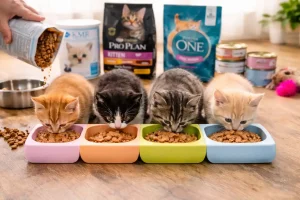
Wet food is like soup. Dry food is like crackers. Both have value.
- Moisture supports hydration
- Protein and fat must be high
- Dry helps mild dental scraping
- Free-feeding dry food too early can cause weight gain
- Mixed feeding works well
Hydration is key. Always provide clean water.
Comparison Table
| Feature | Wet | Dry |
|---|---|---|
| Moisture | High | Low |
| Calories | Lower density | Higher density |
| Cost | Higher | Lower |
| Storage | Refrigerate | Easy storage |
Brand Ratings
Royal Canin – 9/10
Purina Pro Plan – 8.5/10
Feeding Schedule Table by Age
This table gives a quick plan you can print and follow.
| Age | Meals | Food | Milestone |
|---|---|---|---|
| 0–2 Weeks | 8–12 | Milk | Eyes closed |
| 2–4 Weeks | 6–8 | Gruel | Teeth start |
| 4–8 Weeks | 4–6 | Wet | Litter learn |
| 2–6 Months | 3–4 | Kitten | Fast growth |
| 6–12 Months | 2–3 | Kitten | Slower growth |
Brand Ratings
Royal Canin – 9/10
Purina Pro Plan – 8.5/10
Signs Your Kitten Is Underfed or Overfed
- Healthy weight: ribs felt, not seen
- Steady growth curve
- Stool firm, not watery
- Good energy
- Call the vet if weak or bloated
Quick Check Table
| Sign | Meaning |
|---|---|
| Visible ribs | Underfed |
| Round belly always | Overfed |
| Loose stool | Food issue |
| Low energy | Possible low intake |
Brand Ratings
Royal Canin – 9/10
Purina Pro Plan – 8.5/10
Special Feeding Situations
Orphaned Kittens
- Bottle-feed every 2–3 hours
- Use kitten milk replacer
- Hold belly down, not on back
Large Breed Kittens
- Grow slower
- Watch portions carefully
Underweight or Rescue Kittens
- Increase calories slowly
- Avoid refeeding shock
Quick Reference Table
| Situation | Key Action |
|---|---|
| Orphan | Bottle every 2–3 hrs |
| Large breed | Controlled calories |
| Rescue | Slow increase |
Brand Ratings
Royal Canin – 9/10
Purina Pro Plan – 8.5/10
Common Feeding Mistakes to Avoid
- Free-feeding too early
- Switching food too fast
- Feeding adult food too soon
- Ignoring stage changes
- Inconsistent meal times
I made this mistake once. I switched too fast. Soft stool followed. Slow changes work best.
Mistake Table
| Mistake | Risk |
|---|---|
| Free feeding | Obesity |
| Fast switch | Diarrhea |
| Adult food | Poor growth |
Brand Ratings
Royal Canin – 9/10
Purina Pro Plan – 8.5/10
Establishing a Long-Term Feeding Routine
- Same time daily
- Measure food
- Check weight monthly
- Adjust at 1 year
Routine builds trust. Cats love rhythm.
Routine Table
| Habit | Benefit |
|---|---|
| Timed meals | Stable digestion |
| Measured food | Weight control |
| Monthly weigh | Early problem detection |
Brand Ratings
Royal Canin – 9/10
Purina Pro Plan – 8.5/10
Conclusion: Choosing the Right Feeding Schedule
A proper Feeding Schedule for Kittens by age ensures healthy growth, stable energy, and smooth transition into adulthood.
- Age determines frequency
- Monitor growth closely
- Ideal for new kitten parents
- Seek vet help for special cases
Your next step is simple. Match your kitten’s age and weight to this guide. Start a steady routine.
A kitten’s body is like soft clay. Early care shapes the future. Feed with love. Feed with structure. And watch them grow strong.
FAQs for Feeding Schedule for Kittens by Age
How often should I feed a newborn kitten?
Newborns need milk every 2–3 hours, even at night. Their stomach is tiny. Use kitten milk replacer if there is no mother. Avoid cow’s milk.
When can I start weaning based on feeding schedule for kittens by age?
Start at 4 weeks. Mix wet kitten food with formula. Make a soft gruel. Go slow. Most kittens stop milk by 8 weeks.
How many meals does a 2–6-month kitten need?
Kittens 2–6 months need 3–4 small meals daily. They grow fast. Follow weight guides on kitten food labels.
Should I choose wet or dry food in a feeding schedule for kittens by age?
Both can work. Wet food helps hydration. Dry food is easy to store. Many owners use a mixed plan for balance.
When should I switch from kitten food to adult cat food?
Most cats switch at 12 months. Large breeds may need more time. Check weight and growth before changing food.