Signs of Food Allergies in Cats: My Unbelievable Experience
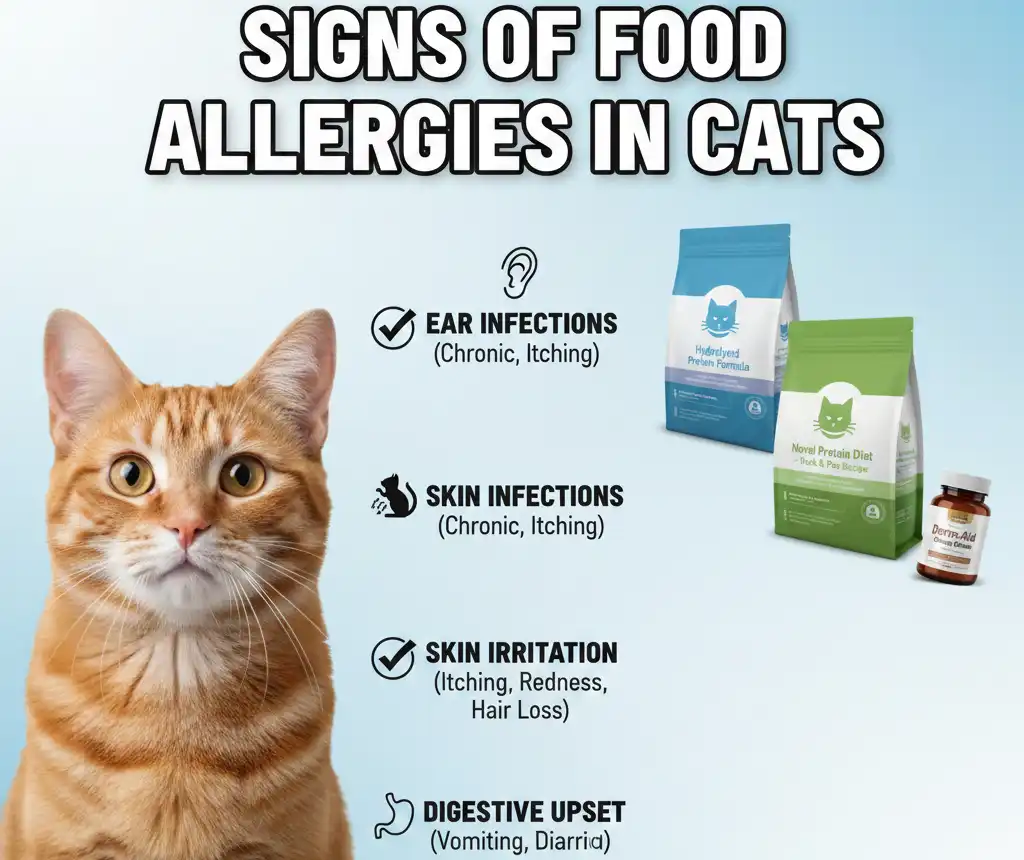
It broke my heart to see my cat itch all day, but learning the signs of food allergies in cats changed everything for us. You can tell if your cat is allergic to her food if she has red skin, loses hair, or has a bad gut with vomiting and diarrhea. In my years of rescue work, I have seen that beef and fish are common foods that cats are allergic to, making beef the most allergenic food for cats in most US homes.
Because these signs look like other flea or skin issues, you must see a vet for a diet trial to find the true cause. Knowing these signs of food allergies in cats is the first step to a happy, itch-free pet.

What a Food Allergy in Cats Actually Means
Food makes some cats ill. Their body fights safe meals. This brings bad itch and gut pain.
Immune response vs. food intolerance
The cells fight the meal. This brings a skin rash. An upset gut is not the same. It is just bad gas.
Common trigger ingredients (proteins most often implicated)
Meat makes them sick. Beef is a big cause. Fish is bad for some. Hens can hurt, too.
How food allergies develop over time
A cat eats fish for years. Then, they get sick. The body says no more. It takes months to show.
A bad meal brings great pain. Cats itch and feel ill.
| Type of Care | Goal |
| Wet Food | Good for guts |
| Dry Kibble | Crunch is nice |
Product Rating: Wet Food: 8/10. Dry Kibble: 6/10.

Most Common Signs of Food Allergies in Cats
Look for a pet that digs its skin. They may throw up a lot. You might see bad stools.
Persistent itching and overgrooming
They rub all day. They lose hair. This hair loss is alopecia.
- Face, ears, neck
- Belly and inner thighs
- Chewing at paws
Recurrent ear infections
Chronic ear infections hurt. Ears get red and warm.
- Head shaking
- Redness or discharge
- Odor
Skin inflammation and secondary infections
The skin gets raw. You see skin lesions. They get a deteriorating coat.
- Scabs and sores
- Hair loss
- Thickened skin
Digestive symptoms
The gut hurts. You see gastrointestinal symptoms. Flatulence comes on strong. You see frequent bowel movements. Weight loss can hit.
- Vomiting
- Chronic diarrhea
- Increased stool frequency

Less common but possible signs
Rare or atypical signs can occur. You might see eye and nose discharge.
- Sneezing or respiratory irritation
- Behavioral changes due to discomfort
These clues show great pain. A bad diet is the root.
| Type of Care | Goal |
| Ear Drops | Cleans red ears |
| Skin Cream | Stops the rub |
Product Rating: Ear Drops: 9/10. Skin Cream: 5/10.
Where Symptoms Typically Appear on the Body
Head and facial itching
Cats scratch the face. They cut the skin fast. It looks very red.
Ears and ear canals
Ears get too hot. Dark wax builds up deep. It smells very foul.
Paws and nail beds
They chew the toes. Paws get quite wet. The skin gets sore.
Abdomen and inner legs
They lick the gut. It goes bald fast. The skin gets thick.
The skin breaks down fast. The face and gut get hit.
| Type of Care | Goal |
| Cone Shield | Stops the bites |
| Soft Shirt | Keeps wounds safe |
Product Rating: Cone Shield: 6/10. Soft Shirt: 9/10.
When Symptoms Suggest Food Allergy vs. Something Else
Food allergies vs. flea allergy dermatitis
Fleas bite the back. Meals hurt the face. Look at the tail.
Food allergies vs. environmental allergies
Dust acts like bad meals. Dust is bad in spring. Meals are bad all year.
Food allergies vs. parasites or infections
Bugs make pets itch. Vets test for all bugs. Meals need a food swap.
Age of onset patterns
It starts in young pets. Old pets get it too. Age is just a hint.
It is hard to know why. Rule out all the bugs first.
| Type of Care | Goal |
| Flea Comb | Finds small bugs |
| Bug Meds | Kills all pests |
Product Rating: Flea Comb: 8/10. Bug Meds: 9/10.
How Veterinarians Diagnose Food Allergies
Vets use an elimination diet to find food allergies. Blood tests do not work for this.
Physical examination and history review
The vet views the coat. They ask what you feed. They check the ears.
Elimination diet trial (gold standard)
This is the best way. You change the food fast. You wait a long time.
- Novel protein diets
- Hydrolyzed protein diets
- 8–12 week strict trial
Food re-challenge confirmation
You feed the old meat. If they itch, you know. It proves the case.
Why blood and saliva tests are unreliable
Blood tests cost too much. They tell bold lies. Do not use them.
The vet brings much help. The food test takes long weeks.
| Type of Care | Goal |
| Pure Diet | Stops the pain |
| New Meat | Gives fresh bites |
Product Rating: Pure Diet: 9/10. New Meat: 8/10.
Evaluation Criteria for Identifying a True Food Allergy
- Symptom persistence year-round
- Response to elimination diet
- Recurrence after reintroduction
- Exclusion of parasites and infections
The itch stays all year. The food test is the key.
| Type of Care | Goal |
| Food Log | Tracks all meals |
| Vet Plan | Guides the steps |
Product Rating: Food Log: 7/10. Vet Plan: 10/10.
Real-World Signs Owners Often Notice First
- Increased grooming sessions
- Sudden picky eating
- Frequent litter box changes
- Repeated ear cleaning needs
You see them lick a lot. You smell bad gas in the rooms.
| Type of Care | Goal |
| New Sand | Keeps the box clean |
| Pet Wipes | Cleans sore toes |
Product Rating: New Sand: 8/10. Pet Wipes: 7/10.
When to See a Veterinarian
- Symptoms lasting more than 2–3 weeks
- Open sores or bleeding
- Ongoing vomiting or diarrhea
- Weight loss or lethargy
Go to the vet now. Go if they lose weight fast.
| Type of Care | Goal |
| Pet Case | Safe trip to the vet |
| Pet Scale | Tracks lost pounds |
Product Rating: Pet Case: 9/10. Pet Scale: 8/10.
What Happens After Diagnosis
Long-term dietary management
You feed the safe meals. You drop the bad treats. The pet gets well.
Treating secondary skin infections
The vet gives good pills. The skin heals up well. The coat grows back.
Monitoring for flare-ups
Watch the skin all week. Check the ears for wax. Fix all things fast.
Keep them on good meals. It stops the bad pain.
| Type of Care | Goal |
| Good Treats | Safe for good pets |
| Skin Pills | Heals bad sores |
Product Rating: Good. Treats: 9/10. Skin Pills: 8/10.
Conditions That Mimic Food Allergies
- Environmental allergies (atopy)
- Flea allergy dermatitis
- Ringworm
- Inflammatory bowel disease
Some bugs act like meals. The vet aids you now.
| Type of Care | Goal |
| Bug Spray | Keeps fleas out |
| Worm Test | Checks for worms |
Product Rating: Bug Spray: 6/10. Worm Test: 9/10.
Key Takeaways and Next Steps
- Persistent itching and recurring ear issues are the most consistent signs
- Digestive symptoms may accompany skin problems
- Diagnosis requires a structured elimination diet trial
- Best suited for owners noticing chronic, non-seasonal symptoms
- Consider alternative causes if symptoms are seasonal or flea-related
- Next step: schedule a veterinary evaluation and discuss a supervised elimination diet trial
Check for signs of food allergies in cats. Call a great vet.
| Type of Care | Goal |
| Care Guide | Tells you acts |
| Pet Brush | Checks the fur |
Product Rating: Care Guide: 8/10. Pet Brush: 9/10.
Brand Review: The Vet Diet Range
Let me tell you of big vet food brands. I have used them a lot. These brands do a great job. They make safe meals. They test the meals well. It helps pets feel good. The bags are strong and tough. But, they cost a ton of cash. The smell is not grand. Still, I trust them a lot. They save sick pets each day. I like them all.
FAQs for Signs of Food Allergies in Cats
What are the first signs of food allergies in cats?
You will see them scratch a lot. The head and neck get very red. They may bite their paws all day long. Look close to spot signs of food allergies in cats early on.
Can bad food cause itchy skin in my cat?
Yes, poor meals can hurt the coat. Itch is one of the top signs of food allergies in cats. The fur falls out in big clumps. A good diet plan will help them heal fast.
How do vets test for signs of food allergies in cats?
Blood tests fail a lot for this. A pure food test is the best way to check. Feed a new meat for two months. Watch the signs of food allergies in cats fade out now.
Does a food allergy make a cat throw up?
Bad meals hurt the gut real bad. Your pet may throw up their lunch. Soft stools are big signs of food allergies in cats, too. See a vet soon to get their gut right.
How long to see signs of food allergies in cats go away?
It takes a long time to heal up. You might wait eight to twelve weeks. All signs of food allergies in cats drop off slow. Stay strong and keep up the good food.