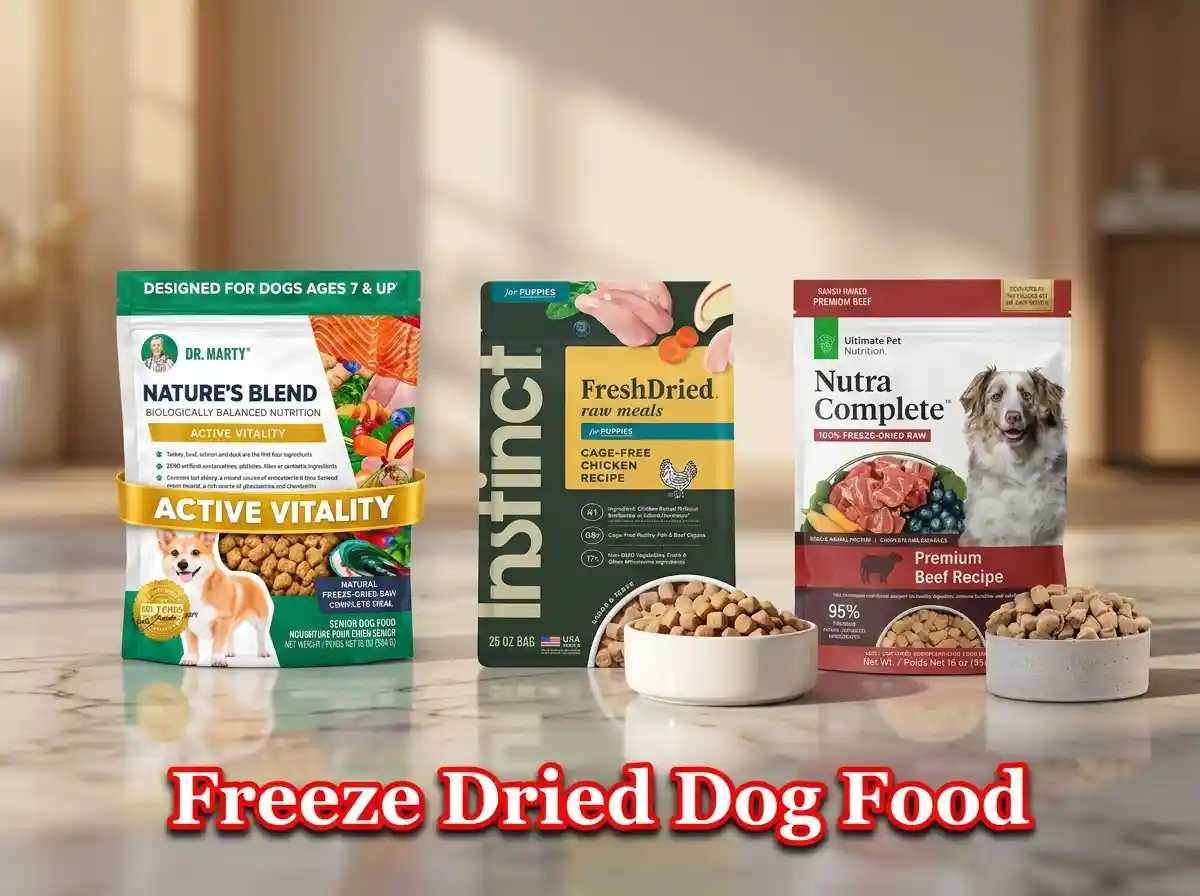


Is Freeze Dried Food Good for Dogs? Benefits, Risks & Cost

Is Freeze Dried Food Good for Dogs? for dogs. It can offer high animal protein, a long shelf life, and easy meal prep. But the food itself is not always safer or more nutritious than cooked kibble. The key is the recipe, not the drying method.
Some freeze-dried foods use raw meat. This brings a real food safety risk. They can also cost far more per meal than regular kibble. Before you buy, check the full nutrient profile, feeding claim, calorie count, and safety record.

Key Takeaways: Is Freeze Dried Food Good for Dogs?
Yes, freeze-dried food can be a good choice when it is complete, balanced, and made with strong safety controls. Raw freeze-dried food also needs careful handling.
Overall verdict: A useful food choice, but not the best fit for every dog.
- Best for: Owners who value easy storage, simple serving, and meat-rich recipes.
- Who should skip it: Homes that need to avoid raw food germs.
- Best starting choice: A complete and balanced recipe with a clear life-stage claim.
- Main strength: High nutrient density and easy storage.
- Main caution: Raw food safety and high feeding costs.
| Feature | Product or industry data | Practical meaning |
|---|---|---|
| Main use | Full meals or food toppers | Check the feeding claim |
| Main process | Frozen food dried under low pressure | Removes much of the water |
| Calorie density | Example: 4,420 kcal/kg | Small portions can supply many calories |
| Safety | Raw recipes can carry germs | Freeze-drying does not kill all germs |
Is Freeze Dried Food Good for Dogs?
It can be, but a good nutrient profile and safe production matter more than the freeze-dried label.
Freeze-dried food starts with frozen food. A vacuum then removes the ice as water vapor. This leaves a light, dry product that is easy to store.
The process can help keep the food’s shape and many nutrients. Yet it does not make raw meat safe from every harmful germ.
A good recipe should have:
- A clear complete and balanced claim.
- Named animal protein sources.
- A full nutrient and calorie profile.
- A clear life-stage statement.
- Good food safety and quality checks.
AAFCO sets nutrient profiles and model label rules. It does not test, approve, or certify dog food. The label should state whether the food meets the nutrient profile for adult maintenance, growth, or all life stages.
See the AAFCO guide to reading pet food labels.

Pros and Cons of Freeze Dried Dog Food
Freeze-dried food offers ease and high nutrient density, but raw safety and price are real trade-offs.
| Type | Feature | Observed Real-World Outcome |
|---|---|---|
| Pro | Light package | Easy to carry and store |
| Pro | High calorie density | Small servings can meet energy needs |
| Pro | Meat-based recipes | Many use named meat, organs, and bone |
| Con | Raw food risk | Germs may remain after drying |
| Con | High cost | Daily feeding can cost much more than kibble |
Freeze Dried Dog Food: Nutrition and Ingredient Analysis
The label tells you far more than the front of the bag. Protein, fat, fiber, moisture, and calories are key parts of the check.
Official Label Breakdown
Here is one real example: Stella & Chewy’s Chicken Freeze-Dried Raw Dinner Patties.
The brand’s product page lists chicken with ground bone, chicken liver, and chicken gizzard as its first three ingredients. Pumpkin seed and organic fruits and vegetables follow them.
| Label detail | Published value |
|---|---|
| Crude protein | 48% minimum |
| Crude fat | 28% minimum |
| Crude fiber | 5% maximum |
| Moisture | 5% maximum |
| Calories | 4,420 kcal/kg |
| Calories per cup | Not applicable; patties |
| Ash | Not stated on the product page |
| Calcium and phosphorus | Not stated on the product page |
The recipe has named animal proteins and organs. The ground bone also adds minerals. The added vitamins and minerals help support the full nutrient mix.
The 48% protein figure looks high. But protein alone does not prove that a food is complete or easy to digest. The full amino acid and mineral balance matters too.
See the official Stella & Chewy’s product page.
Dry Matter Basis: What Do the Numbers Mean?
Moisture can make food labels hard to compare. Dry matter basis (DMB) removes water from the equation.
Formula:
DMB = (As-fed nutrient % ÷ (100 − moisture %)) × 100
Using the sample recipe’s 5% maximum moisture:
| Nutrient | Calculation | Estimated DMB |
|---|---|---|
| Protein | 48 ÷ 95 × 100 | 50.53% |
| Fat | 28 ÷ 95 × 100 | 29.47% |
| Fiber | 5 ÷ 95 × 100 | 5.26% |
These are estimates based on the maximum moisture value. Actual values can differ.
Ash is not published for this recipe. So, a sound carbohydrate estimate by difference is not possible. Do not add an assumed ash value and present it as a lab result.
Animal Protein, Plant Protein, and Ingredient Order
Chicken, liver, and gizzard lead this recipe. They provide animal protein and other nutrients.
Pumpkin seed adds plant nutrients and some protein. The fruit and vegetable mix adds other ingredients, but it does not replace the need for a balanced formula.
Fresh meat also contains water. Drying removes much of that water. So, the weight of meat before processing does not show the final share of meat in the dry food.
How Much Does Freeze Dried Dog Food Cost?
The cost per 1,000 calories gives a fairer view than the bag price alone.
Here is a calorie-based comparison of two foods. One is freeze-dried raw food. The other is adult kibble.
| Cost detail | Stella & Chewy’s Chicken | Next Level Chicken & Brown Rice |
|---|---|---|
| Food type | Freeze-dried raw | Dry kibble |
| Bag size | 25 oz | 28 lb |
| Listed price | $59.97 | $57.70 |
| Calories per kg | 4,420 | 3,470 |
| Calories per cup | Not applicable | 365 |
| Total bag calories | 3,133 | 44,071 |
| Cost per 1,000 kcal | $19.14 | $1.31 |
| Daily cost at 500 kcal | $9.57 | $0.65 |
| 30-day cost | $287.16 | $19.64 |
Prices are US online listings. Tax, shipping, and local price changes are not included.
The math uses this formula:
Cost per 1,000 kcal = (Bag price ÷ Total bag calories) × 1,000.
For the freeze dried food:
$59.97 ÷ 3,133 × 1,000 = $19.14.
For a fair portion comparison, 500 kcal is the daily target used here. It is a math example, not a feeding rule for every dog.
At that level, the freeze-dried food needs about 113 g per day. The kibble needs about 144 g, or 1.37 cups.
This shows the big cost gap. The freeze-dried bag lasts about six days. The kibble bag lasts about 88 days at this same calorie target.
Your real cost may also include delivery fees, waste, storage bins, and extra bowls. Wet food, such as Pedigree wet dog food, is another format to weigh against your budget. For a lower-cost dry option, see our Member’s Mark dog food review.
Is Freeze Dried Food Right for Puppies, Adults, and Seniors?
The right food depends on your dog’s age, size, health, and daily needs.
Puppies and Large-Breed Puppies
Puppies need food made for growth. Check that the label says it meets the nutrient needs for growth or all life stages.
Large-breed puppies need extra care. For a dog expected to weigh 70 lb or more as an adult, check for a clear statement that the food supports growth of large-size dogs.
Do not rely on high protein or a meat-first claim alone. Calcium, phosphorus, and their balance matter too.
Adult and Senior Dogs
Adult dogs can eat a recipe made for adult maintenance. Senior dogs may also do well on it, but calorie needs can change with age and activity.
The sample chicken recipe has 28% minimum fat. That can make portion control more important for a dog that gains weight with ease.
Watch body shape and weight. Ask your vet to help set a daily calorie target.
Dogs With Food Allergies
Freeze-dried food is not a cure for food allergies. It can also contain several protein sources.
Itching, ear trouble, vomiting, and diarrhea can have many causes. The Merck Veterinary Manual describes a strict food trial as the key way to test a suspected food allergy. A vet may choose a hydrolyzed or novel-protein diet, then use a food challenge to confirm the cause.
A retail limited-ingredient food is not a shortcut for this test.
Grain-Free Recipes and Canine DCM: What Should Owners Know?
Grain-free does not mean better, and the FDA has not proven that one ingredient causes DCM.
Some freeze-dried recipes have no grains. Others use grains or seeds.
In 2018, the FDA began looking into reports of dilated cardiomyopathy (DCM) in dogs eating some diets rich in peas, lentils, and potatoes. The agency said the link was complex and may involve many factors.
This does not prove that grain-free food causes heart disease. It does mean that owners should look past the front label and review the full recipe with their vet.
Read the FDA’s DCM investigation update.
Safety and Recall History
Raw freeze-dried food can still carry harmful germs, so safety checks matter as much as the ingredient list.
The CDC says freeze-drying, freezing, and drying can reduce germs but do not kill all of them. It does not recommend raw pet food or raw treats.
Two FDA-listed examples show why recall checks matter:
| Date | Product | Issue | Scope and outcome |
|---|---|---|---|
| June 8, 2026 | Steve’s Real Food Freeze-Dried Chicken Recipe | Low vitamin B1 (thiamine) | Expanded recall included dog food lot C26022, 1.25 lb bag; stop feeding and return the affected lot |
| October 9, 2025 | Foodynamics freeze-dried pet treats | Possible Salmonella | Specific treat lots recalled; the products were treats, not full meals |
These are category safety examples. They are not claims that the Stella & Chewy’s sample recipe was recalled.
Check the official FDA recall and safety page before buying. Also check the brand’s own official product and manufacturer page.
Keep raw food away from other food. Wash hands, bowls, and tools after each meal. Homes with young children, older adults, or people with weak immune systems should take extra care.
How to Switch and Serve Freeze Dried Food
A slow food change can help reduce stomach upset.
Use a gradual 7–10 day change:
| Days | New food | Old food |
|---|---|---|
| 1–3 | 25% | 75% |
| 4–6 | 50% | 50% |
| 7–9 | 75% | 25% |
| 10 | 100% | 0% |
Follow the pack’s own guide if it gives a different plan.
Some foods can be served dry. Others work best with added water. Use the maker’s serving guide and keep fresh water near the bowl.
Before adding water, measure the dry portion. This helps you avoid adding too many calories.
Store unopened food in a cool, dry place. After adding water, follow the maker’s fridge and use-by rules. Throw away food left at room temp for too long.
What Do Dog Owners Say?
Owner reviews can show what dogs enjoy, but they do not prove a health benefit.
On Primal’s official product page, its Chicken Nuggets had a 4.6 out of 5 rating from 23 reviews when checked.
One verified buyer, Constance D., wrote:
“My dogs have always loved the Freeze Dried Raw Chicken Nuggets.”
A one-star review by Bhaskar noted a delivery issue:
“The box arrived only with goat milk and rest of the items were missing”
These comments show both positive food acceptance and a real buying issue. The second comment concerns a missing order item, not the dog’s health.
Reviews are best used as extra context. The label and food safety record should guide your choice.
Practical Buying Checklist and Selection Guide
Check the full label before you pay for any freeze-dried recipe.
Use these five checks:
- Adequacy: Does the food offer complete and balanced nutrition?
- Life stage: Does it suit your dog’s age and size?
- Calories: Are kcal/kg and serving sizes clear?
- Nutrition: Are protein, fat, fiber, moisture, and key minerals shown?
- Cost: What will 30 days of feeding really cost?
| Dog or owner need | Food choice | Main check |
|---|---|---|
| Full daily meals | Complete freeze-dried food | Life-stage claim |
| Easy travel meals | Shelf-stable freeze-dried food | Storage rules |
| Lower food budget | Dry kibble | Cost per 1,000 kcal |
| Extra moisture | Wet food | Calories per can |
| Raw food concern | Cooked food | Food safety controls |
Other formats may suit your home better. Sundays for Dogs is an air-dried option, not a freeze-dried raw food. Next Level dog food offers a dry kibble option for adult dogs.
When you compare brands, ask who makes the recipe, who checks its nutrients, and how the maker tests each batch. WSAVA advises owners to look for trained nutrition staff, sound quality checks, and research.
FAQs
These answers cover the main health, feeding, and cost questions owners ask.
1. Can dogs eat freeze dried food every day?
Yes, when the recipe is complete and balanced for your dog’s life stage. A topper or treat may not provide all needed nutrients. Check the full feeding statement first.
2. Does freeze-drying kill all bacteria?
No. The CDC says freeze-drying may reduce germs, but it does not kill all harmful bacteria. Raw food still needs safe handling.
3. Is freeze dried food better than kibble?
Not by default. Both can offer complete nutrition. The right choice depends on nutrient balance, safety, calories, cost, and your dog’s needs.
4. Should I add water to freeze dried dog food?
Follow the package guide. Some brands allow dry feeding, while others advise adding water. Rehydration also adds moisture to the meal.
5. Is freeze dried food safe for puppies?
It can be, but only when its nutrient statement supports growth. Large-breed puppies need a clear large-size growth claim.
6. Can freeze dried food help with allergies?
It cannot diagnose or cure an allergy. A vet-led food trial is the better way to find a food trigger.
7. Is freeze dried food good for senior dogs?
It can be. Check calorie intake, fat levels, and the dog’s body weight. Ask your vet about the best daily portion.
8. Can I mix freeze dried food with kibble?
Yes, but count the calories from both foods. Keep the total meal balanced and follow the serving guides for each product.
Consultation: Is Freeze Dried Food Good for Dogs?
Freeze-dried dog food can be a sound choice when its full nutrient profile, life-stage claim, and safety controls meet your dog’s needs. It offers easy storage and simple meal prep. But the high price and raw food risk may outweigh those benefits for some homes.
Choose it if you can afford the daily cost and can handle raw food with care. Skip raw freeze dried food if your home needs a lower-risk option. For a dog with health concerns, allergies, or special growth needs, ask your vet to review the exact label before you switch.

Taslima Akter Sumaiya is a passionate pet mom and the founder of PetFoodHubing.com, dedicated to helping dog and cat parents make informed nutrition and food choices. With a Doctor of Veterinary Medicine (DVM) background and education from the University of California, Davis – School of Veterinary Medicine, along with professional experience connected to the United States Department of Agriculture (USDA), she brings a science-informed perspective to pet food research and reviews. Her work is further informed by authoritative veterinary and animal-health research, including insights from USDA-ARS experts such as Dr. Jitender P. Dubey. Through PetFoodHubing, she aims to make pet nutrition simpler, clearer, and more trustworthy for everyday pet parents. Visit now to get more information on How we test and Sources or about us…