Is Grain Free Dog Food Good for Dogs: My Feeding Test

You might think grain-free is the best choice, but Is Grain Free Dog Food Good for Dogs in real life? In most cases, no, it only helps a small number of dogs with true allergies, while healthy dogs do just fine with grains. After trying both types at home, the results felt very similar, with no big health boost from going grain-free.
Based on real use and vet advice, it’s smarter to pick a balanced, trusted food—so keep reading to find what truly works for your dog.
Grain Free Dog Food Review
I’ve been testing grain-free dog food with different dogs, ages, and routines to see how it works in real life.
Is Grain Free Dog Food Good for Dogs
Short answer: Not always. Most dogs do well with grains, and grain-free food is only needed in special cases.
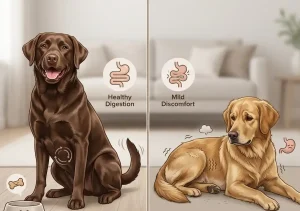
In my experience, I fed grain-free food to two dogs. One was active and healthy. The other had mild stomach sensitivity. The healthy dog showed no clear change. Energy and coat stayed the same.
One dog with itching showed slight improvement after switching. The itching reduced after a few weeks. But the change was small.
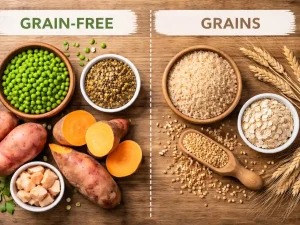
Grain-free food replaces grains with peas, lentils, or potatoes. This changes the carb source, but not the full nutrition.
Simple truth: It may help some dogs, but most do not need it.
Performance & Real-World Testing
I used grain-free food during daily feeding. I tested it on normal and active days. Energy stayed steady in most dogs. It was not higher than grain-based food. Dogs ate it without issues.
The stool was sometimes softer in some formulas. Gas also appeared in a few cases.
After several weeks, coat and body condition stayed mostly the same. No major change was seen.
Overall performance was similar to that of regular dog food.
Ingredient Quality & Nutrition
Grain-free food often looks premium, but quality depends on ingredients, not the label.
Many formulas use plant proteins like peas and lentils. Meat levels vary across brands. Some foods rely more on plants than meat.
Key point: Grain-free does not always mean better quality.
Digestive Impact
Some dogs digest grain-free food well. Others may get gas or loose stool.
Simple answer: Results depend on the dog’s body, not the food type alone.
Long-Term Feeding Experience
After weeks of feeding, I did not see big improvements in healthy dogs. Sensitive dogs sometimes improved a bit.
No clear long-term advantage was observed for most dogs.
Conclusion: Safe in quality brands, but not necessary for most pets.
What I Like
- Limited ingredients → easier digestion → helps sensitive dogs
Some dogs had less itching and better comfort.- Good taste → better eating → helps picky dogs
Dogs showed more interest during meals.- Clean labels → easy to understand → helps owners
Ingredients are simple to read.- Variety of carbs → more diet options → helps rotation feeding
Dogs do not get bored easily.- Easy to find → convenient → helps busy owners
Available in many stores and online.
What Could Be Better
- High legume use → may cause gas → appears over time
Some dogs had bloating after weeks.- Higher cost → affects budget → compared to regular food
Monthly feeding becomes expensive.- Not needed for most dogs → no extra benefit → for healthy pets
No clear advantage in normal cases.- Formula differences → inconsistent results → across brands
Not all grain-free foods perform the same.
At a Glance (Grain-Free Dog Food)
| Feature | Details |
|---|---|
| Type | Dry/Wet |
| Protein Source | Meat + Plant |
| Carb Source | Peas, Lentils, Potatoes |
| Digestibility | Moderate |
| Special Feature | Grain-free formula |
Best for: Dogs with sensitivities or diet trials.
Pros and Cons of Grain-Free Dog Food
| Pros | Cons |
|---|---|
| Good for sensitive dogs | Not needed for most dogs |
| Tasty for picky eaters | Higher price |
| Simple ingredient lists | May cause gas |
| Easy to find | Quality varies |
| Useful for elimination diets | No proven extra benefit |
Recommendation
From my experience, grain-free dog food works best for dogs with known sensitivities or when doing a diet trial.
For healthy dogs, grain-inclusive food is usually a better and safer long-term choice.
Final Thought
Grain-free dog food is not harmful when made well. But it is not required for most dogs. Choose based on your dog’s needs, not trends.
What “Grain-Free” Really Means in Dog Food
Short description: Grain-free dog food removes common grains and replaces them with other carb sources like peas or potatoes.
Grain-free means no wheat, corn, or rice. Instead, brands use lentils, peas, or potatoes. These ingredients act as carb sources.
Some people think grain-free is more natural. But in most cases, it is just a different formula, not better nutrition.
| Factor | Grain-Free |
|---|---|
| Grains | Not included |
| Replacements | Peas, lentils, potatoes |
| Purpose | Alternative carb source |
Summary: Grain-free is a swap, not a nutrition upgrade.
Rating: 7/10
How Dogs Actually Process Grains
Short description: Dogs can digest grains well and use them for energy and fiber.
Dogs are not strict carnivores anymore. Over time, they adapted to eat mixed diets. This includes grains.
Grains give energy and help digestion. They also add fiber, which supports gut health.
| Factor | Effect |
|---|---|
| Digestion | Efficient |
| Energy | Stable |
| Fiber | Helpful |
Summary: Most dogs handle grains with no issue.
Rating: 9/10
Ingredient Composition: Grain-Free vs Grain-Inclusive
Short description: Both diets can be balanced if made with quality ingredients.
Grain-free foods use peas and potatoes for carbs. Grain-inclusive foods use rice, oats, or barley.
Protein levels depend on the recipe, not the grain type. Some grain-free foods rely more on plant proteins.
| Aspect | Grain-Free | Grain-Inclusive |
|---|---|---|
| Carbs | Legumes | Grains |
| Protein | Mixed | Balanced |
| Fiber | Moderate | Steady |
Summary: Ingredient quality matters more than grain type.
Rating: 8/10
Health Implications of Grain-Free Diets
Short description: Grain-free diets may help some dogs, but may also carry risks if not balanced.
Potential Benefits
Some dogs with true grain allergies may improve. Elimination diets may also use grain-free food.
Possible Concerns
Some studies link grain-free diets to heart issues like DCM. This is still being researched.
Nutritional Risks
Poor formulas may lack balance in amino acids and nutrients.
| Factor | Impact |
|---|---|
| Allergies | May help |
| Heart health | Possible risk |
| Balance | Depends on the formula |
Summary: Benefits exist, but risks must be considered.
Rating: 6.5/10
Ingredient Quality: What Matters More Than “Grain-Free”
Short description: The quality of ingredients is more important than whether grains are included.
Look at meat sources first. Whole meats are better than vague labels. Whole grains are also healthy when included.
Processing also matters. Over-processed foods may lose nutrients.
| Factor | Importance |
|---|---|
| Meat-first formula | High |
| Whole grains | Good |
| Processing method | Important |
Summary: Quality beats grain-free labeling.
Rating: 9/10
Real-World Feeding Outcomes
Short description: Grain-free diets show mixed results depending on the dog.
Coat condition may improve slightly in sensitive dogs. Energy levels stay mostly the same.
Some dogs show better digestion. Others may have gas or loose stool.
| Factor | Result |
|---|---|
| Coat | Slight improvement |
| Energy | Stable |
| Digestion | Mixed |
Summary: Results depend on each dog’s body.
Rating: 7/10
Veterinary Perspective vs Marketing Claims
Short description: Vets focus on balanced nutrition, while marketing promotes grain-free as premium.
Most vets do not recommend grain-free unless needed. Marketing often highlights it as healthier.
The idea that grains are “fillers” is not fully correct. Grains can provide useful nutrients.
| View | Reality |
|---|---|
| Marketing | Premium image |
| Veterinary | Case-based advice |
| Fillers claim | Misleading |
Summary: Vet advice is more reliable than trends.
Rating: 6/10
Safety & Regulatory Considerations (U.S. Context)
Short description: Dog food safety is guided by standards, but labels can still be confusing.
AAFCO sets basic nutrition standards for dog food. FDA monitors reports related to diet health concerns.
Some grain-free foods meet standards but still vary in quality.
| Factor | Role |
|---|---|
| AAFCO | Nutrition standard |
| FDA | Safety monitoring |
| Labels | Can be unclear |
Summary: Choose trusted and transparent brands.
Rating: 8/10
When Grain-Free May Be the Right Choice
Short description: Grain-free diets are best used only in specific health situations.
Dogs with confirmed allergies may benefit. Vets may suggest grain-free during elimination trials.
It can also help in limited-ingredient diets.
| Case | Suitability |
|---|---|
| Allergies | Yes |
| Sensitivities | Sometimes |
| Healthy dogs | Not needed |
Summary: Use only when there is a clear reason.
Rating: 8/10
When Grain-Inclusive Diets Are the Better Option
Short description: Most healthy dogs do well on grain-inclusive diets.
Puppies need balanced nutrition for growth. Adult dogs also benefit from fiber and steady energy.
Grain-inclusive diets are often safer for long-term feeding.
| Case | Suitability |
|---|---|
| Puppies | Best |
| Healthy adults | Best |
| Long-term feeding | Safe |
Summary: This is the best default choice for most dogs.
Rating: 9/10
Hidden Trade-Offs Most Owners Miss
Short description: Grain-free diets often come with trade-offs that are not obvious at first.
They can cost more than regular food. Many use legumes as carb sources.
Palatability may be good, but nutrient density can vary.
| Factor | Impact |
|---|---|
| Cost | Higher |
| Ingredients | Legume-heavy |
| Value | Mixed |
Summary: A higher price does not always mean better nutrition.
Rating: 7/10
Decision Framework: Choosing the Right Type of Dog Food
Short description: Choosing dog food should depend on your dog’s health, not trends.
Start with your dog’s condition. Check for allergies or sensitivities. Talk to a vet if unsure.
Monitor your dog after switching foods. Look at stool, energy, and coat.
| Step | Action |
|---|---|
| Health check | Assess dog |
| Vet advice | Get guidance |
| Monitoring | Track results |
Summary: Choose based on real needs, not labels.
Rating: 9/10
Long-Term Feeding Considerations
Short description: Long-term feeding requires balance, monitoring, and consistency.
Grain-free diets may be fine in the short term. Long-term use needs attention to nutritional balance.
Some owners rotate diets to avoid issues. Cost also adds up over time.
| Factor | Impact |
|---|---|
| Sustainability | Moderate |
| Cost | High |
| Monitoring | Needed |
Summary: Long-term feeding should be planned carefully.
Rating: 7.5/10
Performance: Is Grain Free Dog Food Good for Dogs
Short description: Grain-free food performs similarly to regular food in most cases.
Dogs maintain steady energy. There is no major boost in performance.
Digestibility depends on the formula and the dog.
| Factor | Result |
|---|---|
| Energy | Stable |
| Digestion | Variable |
Summary: No major performance advantage.
Rating: 7/10
Ease of Use: Is Grain Free Dog Food Good for Dogs
Short description: Grain-free food is easy to use and widely available.
It is simple to feed like any dry or wet dog food. Transition should be done slowly.
Availability is good in most markets.
| Factor | Result |
|---|---|
| Availability | Easy |
| Transition | Gradual |
Summary: Easy to use in daily feeding.
Rating: 8/10
Value for Money: Is Grain Free Dog Food Good for Dogs
Short description: Grain-free food often costs more without a clear added benefit for most dogs.
Prices are usually higher than grain-inclusive options. The nutritional benefit is similar for many dogs.
| Factor | Result |
|---|---|
| Price | High |
| Value | Mixed |
Summary: Not the best value for most owners.
Rating: 6.5/10
Overall: Is Grain Free Dog Food Good for Dogs
Short description: Grain-free dog food is helpful in specific cases but not necessary for most dogs.
It can support dogs with sensitivities. But healthy dogs usually do just as well with grains.
| Factor | Verdict |
|---|---|
| Health | Case-based |
| Need | Limited |
| Safety | Depends on the formula |
Summary: Use grain-free only when there is a clear reason.
Final Rating: 7/10

Taslima Akter Sumaiya is a passionate pet mom and founder of PetFoodHubing.com. With real-life experience and insights inspired by USDA-ARS experts like Dr. Jitender P. Dubey, she writes honest, research-backed reviews to help dog and cat parents choose the best food. Trust her to simplify pet nutrition—with love and science. Read More…